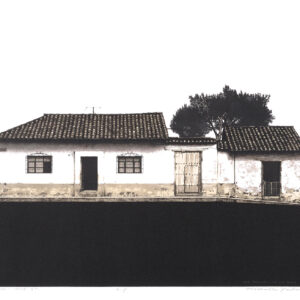
Opening: Thursday, 17 September, 6 p.m.
The National Gallery collection – one of the most representative of Japanese prints in Southeast Europe – follows the development of the major movements and graphic techniques over the past two centuries. The works have been acquired in various ways: through purchases, from exhibitions in 1957 and 1963, from the International Print Biennial in Varna (founded in 1981), donations from artists at their exhibitions in Bulgaria between the 1970s and the late 20th century. Of crucial importance was the 1975 Agreement on Cooperation between Bulgaria and Japan, which led to the expansion of the exchange of exhibitions and other cultural initiatives. An event of key importance is the exhibition organised jointly with the Japan Foundation in Sofia fifty years ago.
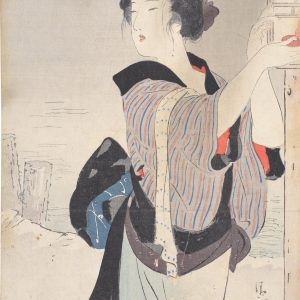
The current exhibition has been included in the programme of the 37th Days of Japanese Culture in Bulgaria. The earliest presented period is associated with the well-known UKIYO-E woodblock print, occupying a central place in the development of Japanese printmaking during the Edo period (1603–1868). In the early 20th century, two new trends emerged: shin-hanga (‘new prints’) and sōsaku-hanga (‘creative prints’). Although developing practically simultaneously, they were based on a different understanding of the role of the artist and the process of creating a graphic work.
SHIN-HANGA emerged in the early 20th century as an attempt to breathe fresh life into traditional ukiyo-e. The established production model was preserved, where the creation of a print was the result of joint work between the publisher, artist, carver and printer.
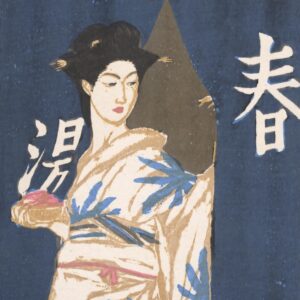
SŌSAKU-HANGA established a different principle: the artists alone designed the composition, processed the woodblock and printed the work themself. In their prints, the tradition of Japanese woodcut engraving was combined with the artistic principles of European Modernism.
After the end of the Second World War, Japanese artists gradually revived their international contacts, some of them established ties with China, the USSR, and the countries of Eastern Europe. It was in such a context that one of the early acquisitions was included in the newly established Department of Foreign Art at the National Gallery – In 1957, the Bulgarian state purchased works shown in an exhibition organised by graphic artist Mircho Yakobov at the Union of Bulgarian Artists gallery, at 125, G.S. Rakovski Street in Sofia.
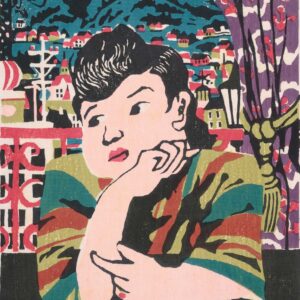
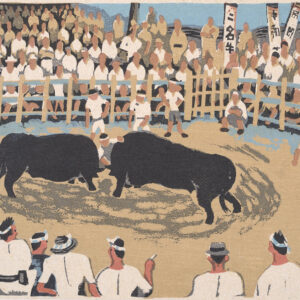
The late 1950s marked a pivotal period where Japanese graphics entered an era of significant technical and artistic diversity. Moving beyond woodcuts, lithography, etching, dry point, mezzotint and various mixed techniques were increasingly used. In the second half of the 20th century, Japanese artists actively took part in international exhibitions and biennales, achieving major recognition on the world graphic scene. This period is extensively represented in the National Gallery collection.
Media partner: BTA / Bulgarian News Agency.